



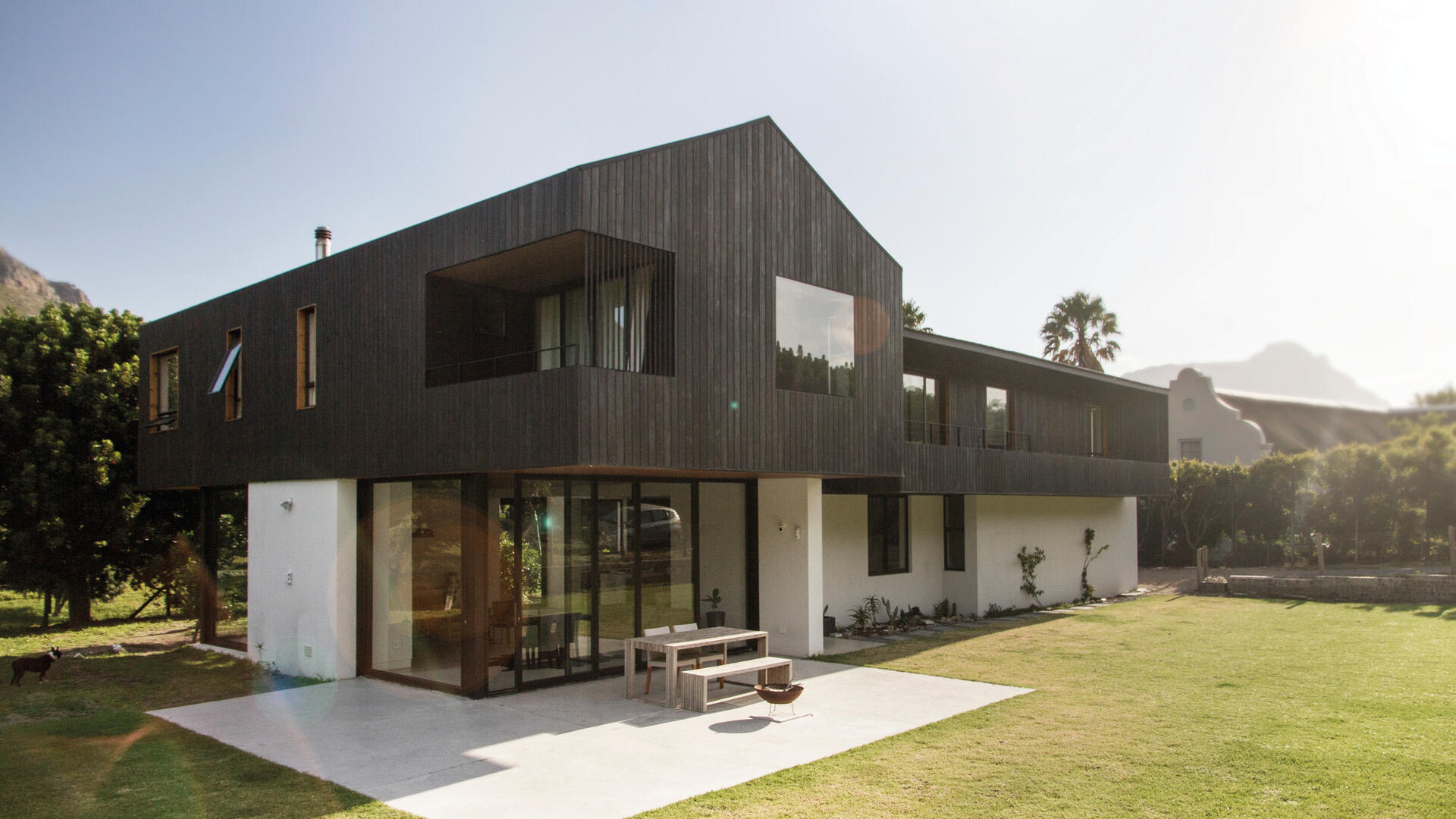
Exterior wood cladding needs a treatment that can handle sun, rain and wind for many years without too much effort. The best option is a penetrating finish that protects the wood while letting it breathe, rather than a film that can crack and peel.
Rubio Monocoat offers two possible options:
Why exterior wood cladding needs care
Exterior cladding is hard to maintain. Year after year, it faces a brutal cycle: intense UV rays, wind-driven rain, persistent damp, and winter’s freeze-thaw. Left unprotected, most timber turns silver-grey within a matter of months.
As it dries out, cladding wood can check and split, while its shaded, damp faces become breeding grounds for algae. Even though certain hardy species can survive untreated for decades, they will eventually lose their vibrant natural colour and their ability to shed water.
A premium treatment changes everything. By applying a nice solid colour – or locking in the wood's original colour - and forcing rainwater to bead and run off rather than to soak in, it keeps your cladding looking pristine, resilient, and cared for.
What makes a good cladding treatment?
Cladding is often high up, hard to reach and covering a big area, so you want a treatment that lasts and is simple to refresh. Look for these characteristics:
- UV protection. Sunlight and rain are the main causes of greying and colour loss, so UV resistance keeps your cladding looking great for longer.
- Water repellence. Rain should bead and run off, not soak into the boards.
- A breathable, open-pore finish. One that lets the wood release moisture will not crack, flake or peel the way a sealing film does.
- Resistance to dirt and algae. A finish that helps the surface stay clean slows the build-up of algae and grime on damp, shaded walls.
- The look you want, in a single layer. Whether that is a natural, grain-forward finish or a solid colour, applied efficiently over a large area.
Oil or solid colour: choosing a cladding finish
Rubio Monocoat offers two cladding finishes. Choosing the right one for your project comes down to the look you want.
| Oil - DuroGrit | Solid colour - WoodCream | |
|---|---|---|
| Finish | Penetrating oil, semi-transparent | Wax-based cream, solid colour (or Transparent #0) |
| Look | Natural, the wood grain stays visible | Even, opaque colour, or natural with Transparent #0 (will grey over time). |
| Best for | Keeping the natural look of timber | A solid colour, or reviving weathered, greyed cladding |
| Key strength | UV protection that holds the colour | Strong water-repellent pearl effect, stays cleaner |
| Surfaces | Vertical and horizontal exterior wood | Vertical surfaces only, like cladding and fences |
| Re-treat | Every 5 years on vertical wood | Colour holds 5 to 10 years, water-beading eases after about 5 |
How to treat wood cladding
Follow the official Rubio Monocoat process. Always check the technical data sheet for your exact product and wood.
01 Clean and open the pores.
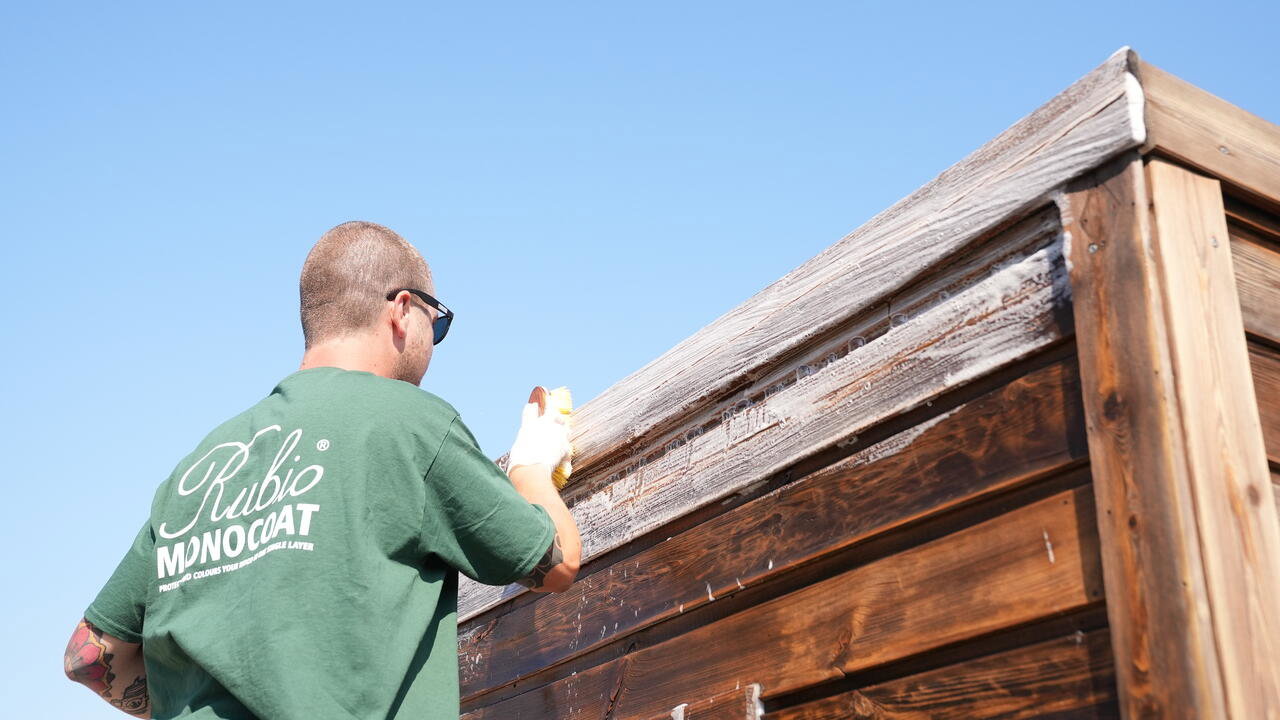
Remove dirt, algae and any flaking old coating. Clean the boards with Exterior Wood Cleaner to degrease the wood and open the pores, and sand where needed. Both finishes work by soaking in, so they need open, clean wood.
02 Let it dry.
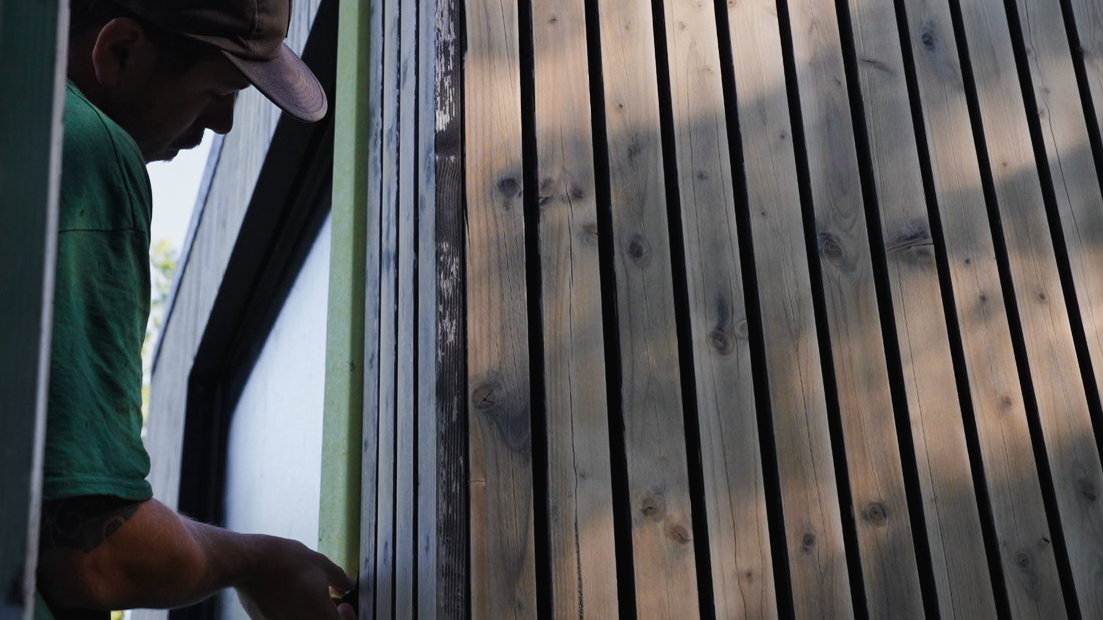
The wood needs to be dry and porous. For DuroGrit, sprinkle a few drops of water: they should soak in within seconds. If they bead, the wood is not ready and it probably needs sanding first.
03 Pick a dry weather window.
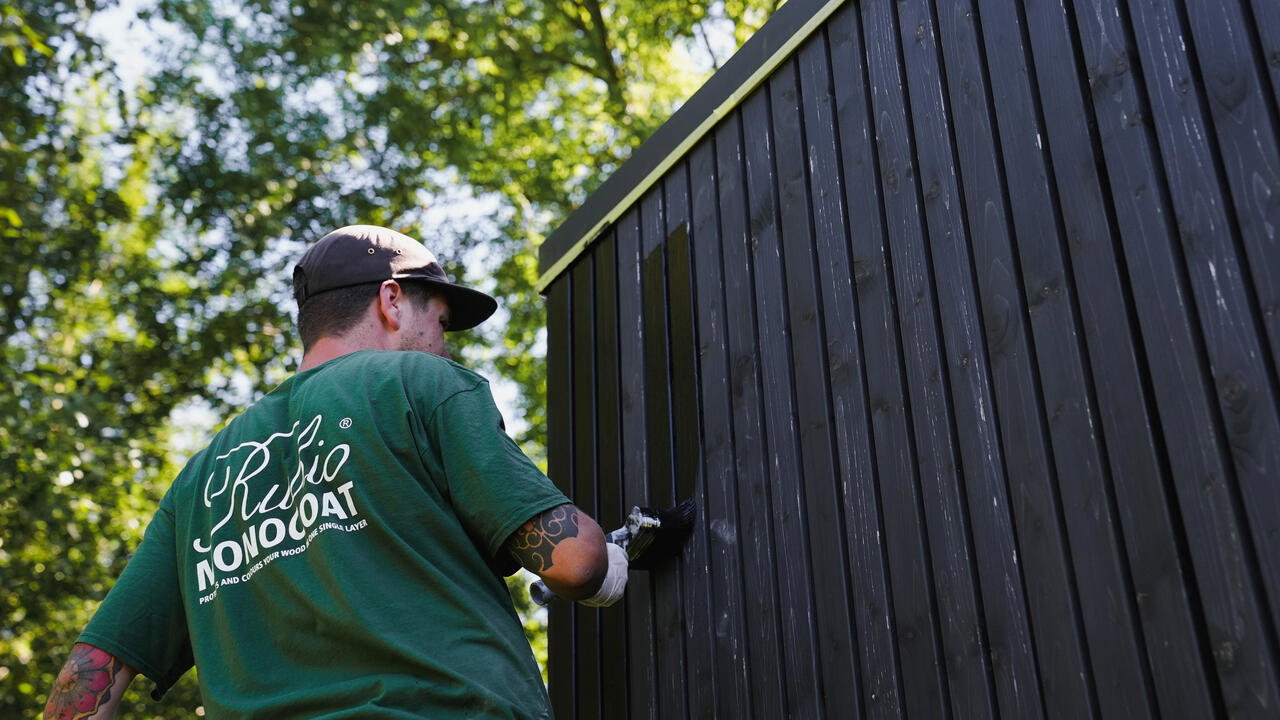
Apply above 10°C, in dry weather, out of strong direct sun, with no rain due during the drying time. Tape off anything you do not want treated.
04 Choose the colour on the actual wood.
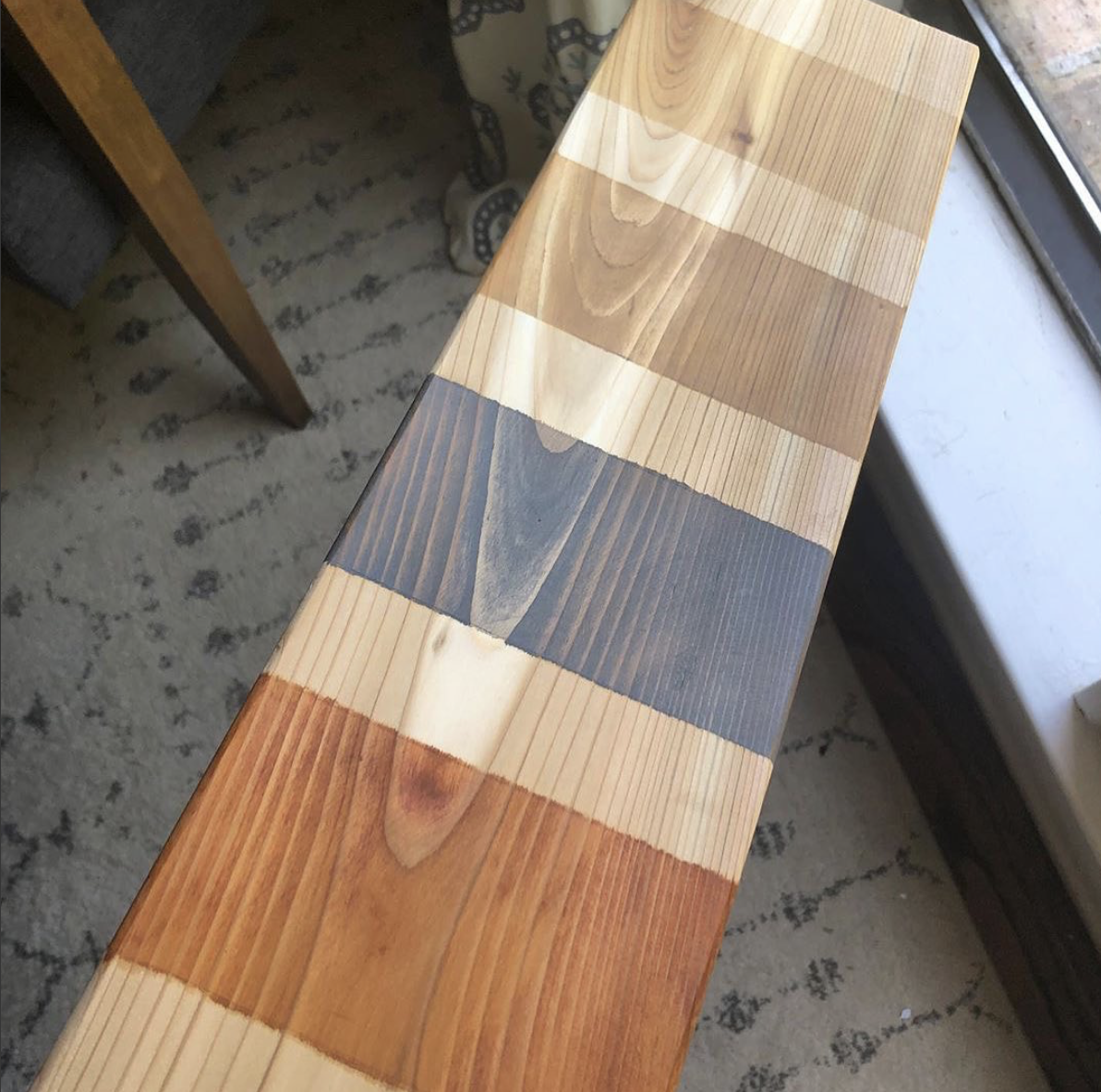
Test on a leftover piece of wood or a hidden board first. For DuroGrit, match the colour to the wet look of the bare wood. For WoodCream, pick your solid colour, or Transparent #0 if you want the wood to grey naturally while staying water-repellent.
05 Brush on a single, even coat.
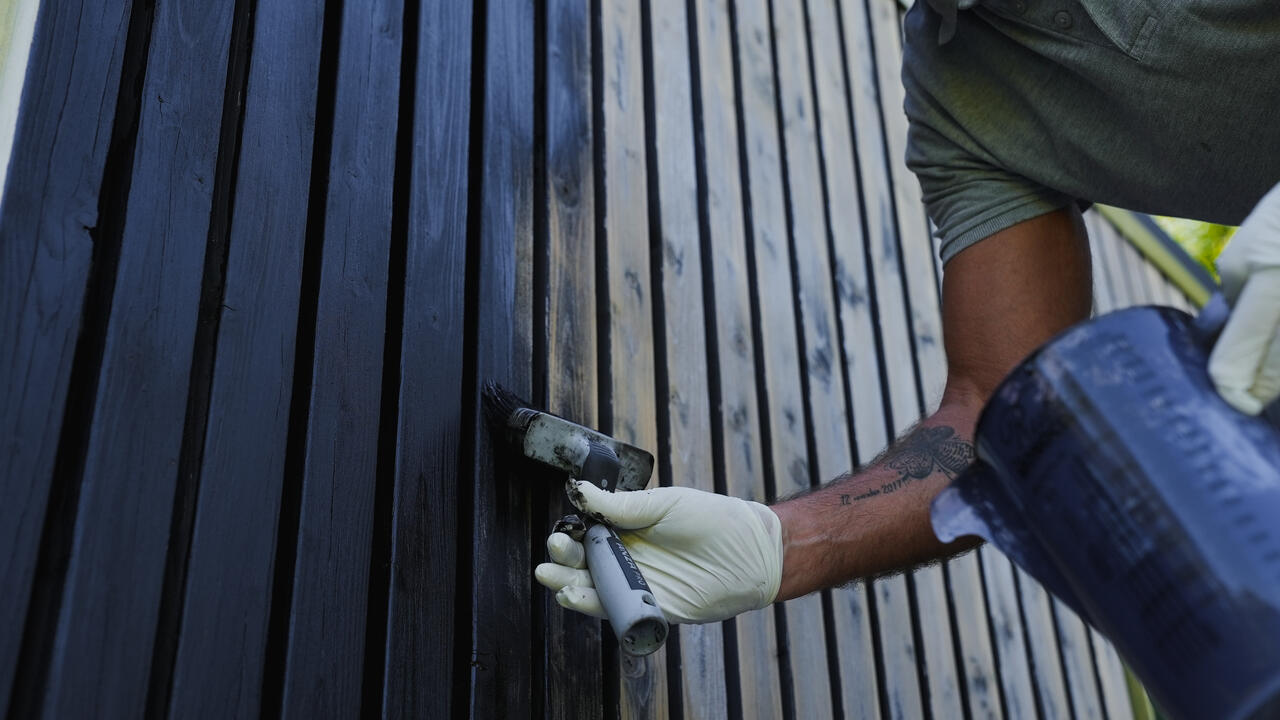
Work along the full length of each board, top to bottom, in sections, and keep the leading edge wet so you do not get overlap marks. Use a soft synthetic brush.
06 Let it dry.
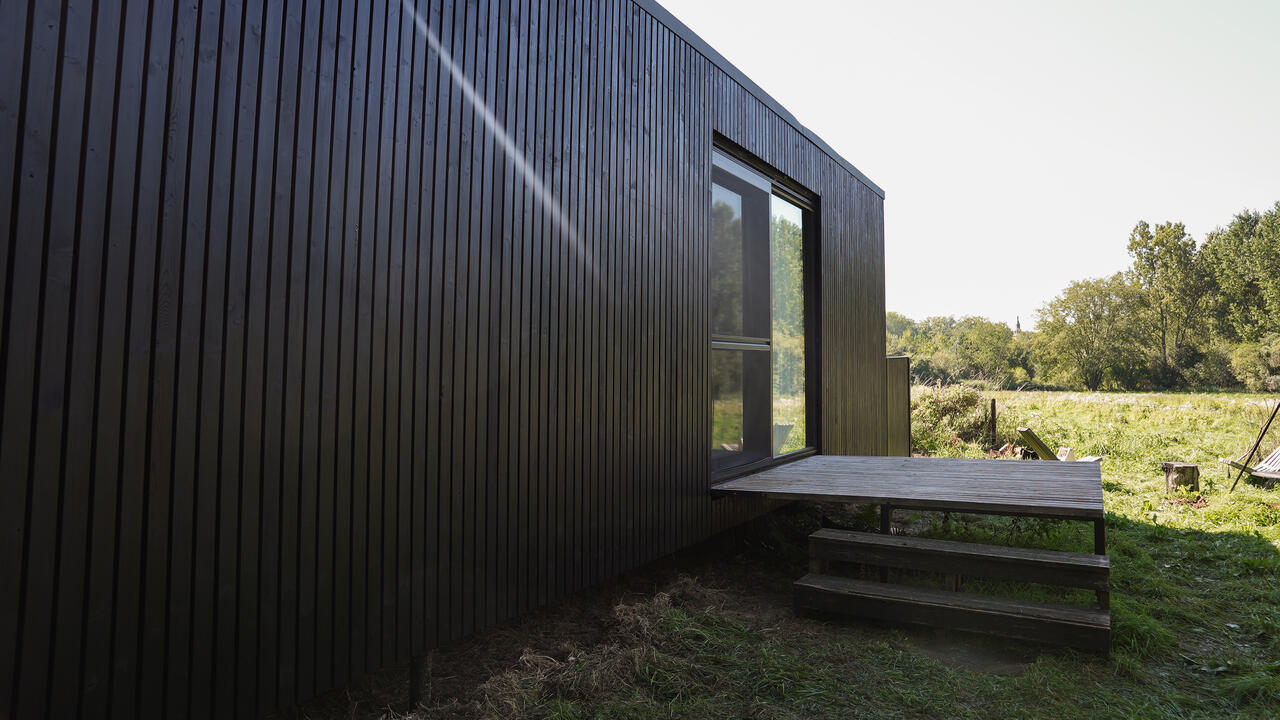
DuroGrit is touch-dry in about 1 to 3 hours and fully cured in 3 days. WoodCream is touch-dry in about 30 minutes, with its water-beading effect appearing after about 3 hours.
Important notice: oil-soaked cloths from DuroGrit can heat up on their own and catch fire. Soak every cloth and applicator in water before you throw it away.
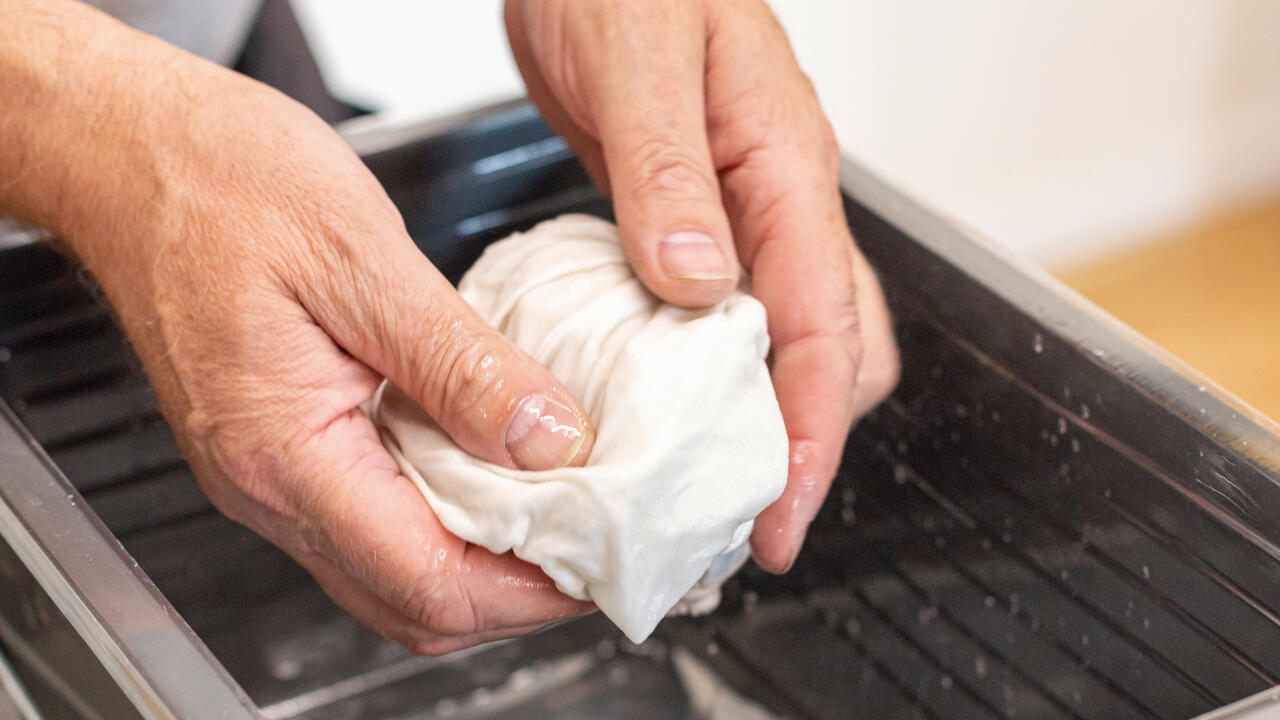
For the full details, check the detailed technical documentation:
Treating larch, cedar & other cladding woods
While the treatment for different species is the same, the wood underneath often behaves differently:
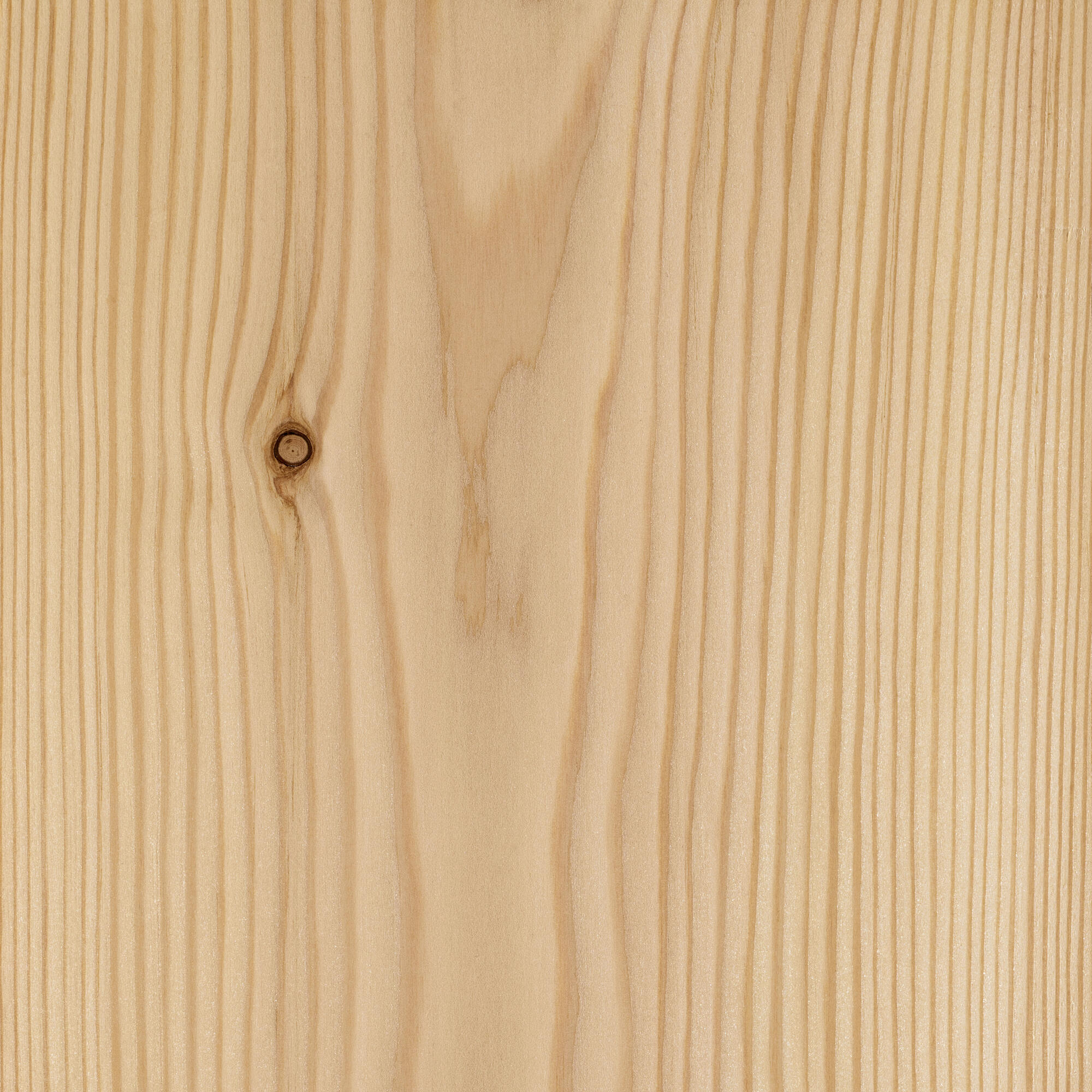
Larch & Siberian larch cladding: a tough, popular cladding softwood that is naturally resinous. Clean it well to open the pores, and treat it to hold the colour, as bare larch silvers quickly.
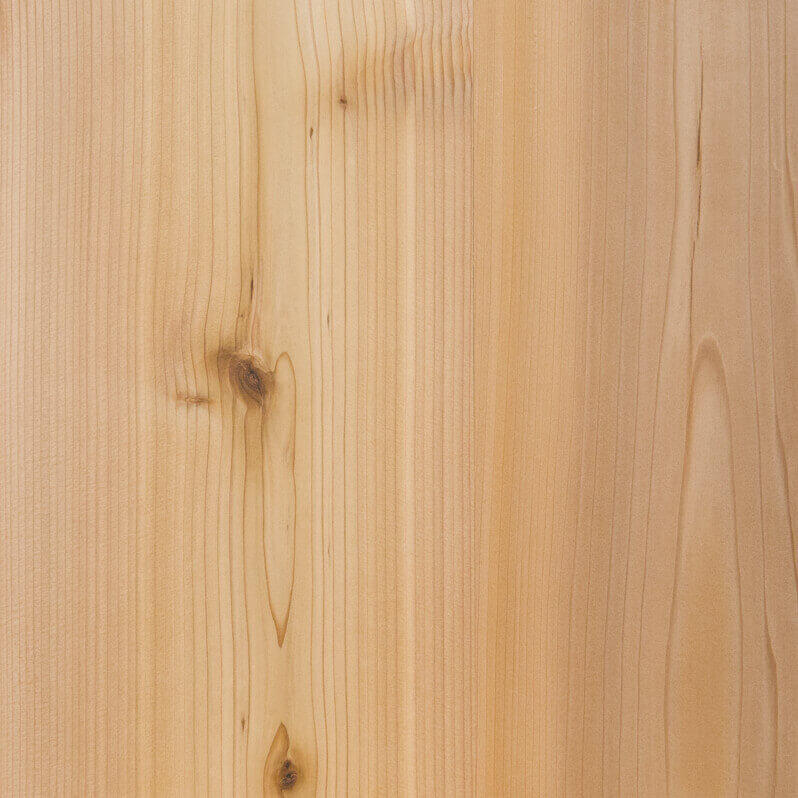
Cedar (Western Red Cedar) cladding: naturally durable and rich in extractives, so degrease and clean it first. Like oak, it can show brown tannin marks as natural tannins move to the surface, which is the wood, not the finish.
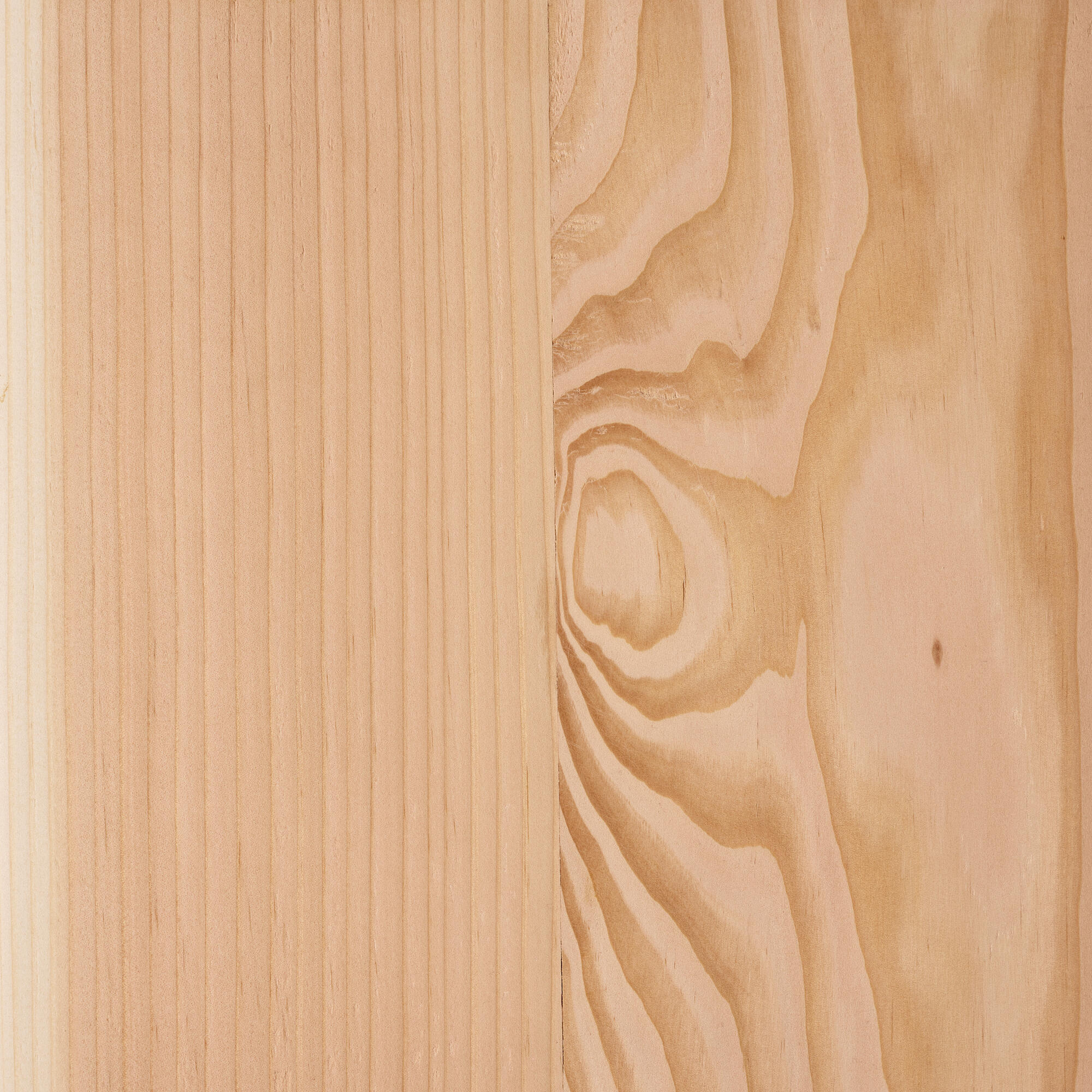
Pine, spruce & Douglas cladding: less naturally durable, so they gain the most from a good treatment. Make sure they are dry and porous before you start.
Oak & dense hardwood cladding: they absorb less and are tannin-rich, so always make a sample first to judge colour and uptake.
How often to re-treat cladding
As a rule of thumb under normal conditions, DuroGrit lasts about 5 years on vertical wood, and WoodCream holds its colour for 5 to 10 years, with its water-beading effect gradually easing after about 5 years.
Give the cladding a quick look each year after winter. Clean off dirt and algae with All Natural Wood Cleaner or Exterior Soap (when the wood looks dry or dull). When the colour starts to fade or rain stops beading, clean the surface with Exterior Wood Cleaner and brush on a fresh coat in the original colour, with no sanding needed.
South and west-facing walls take the most sun and weather, so they will usually be first to need attention.
The proof: coverage, UV testing & certifications
Here are the figures for both cladding finishes, side by side.
| Property | DuroGrit | WoodCream |
|---|---|---|
| Type | Penetrating exterior oil | Wax-based exterior cream |
| UV protection | FibreGrit UV blockers, weathering tested to EN 927-6 | Colour gives UV protection. Transparent #0 has no UV filter |
| Water | Repels water and dirt | Hydrophobic, long-lasting pearl effect |
| Surfaces | Vertical and horizontal | Vertical only (cladding, fences) |
| Coverage* | 8 to 15 m²/L | 12 to 20 m²/L |
| Drying | Touch-dry 1 to 3 h, cure 3 days | Touch-dry about 30 min, pearl effect about 3 h |
| Coats | A single layer | A single layer |
| VOC content | 0 g/L | 0 g/L |
| Certifications | EN 71-3, EN 927-6 (QUV), Stiftung Farbe, Byggvarudatabasen | Red List Free, Stiftung Farbe, DIN EN ISO 2409 class 0 |
*Coverage depends a lot on the wood and its condition, so consider these figures as indicative and always make a sample to judge colour and usage. DuroGrit's final colour also develops as the wood weathers, over roughly 4 to 6 weeks on tropical hardwoods and longer on pressure-treated timber.

Treating your cladding this season?
Order samples of DuroGrit and WoodCream to test the colour on your own boards, browse the colours, or find your nearest stockist. Test on the actual wood first: the final look depends on the species and how it weathers.
Frequently asked questions
What is the best treatment for exterior wood cladding?
The best treatment for exterior wood cladding is a penetrating finish that protects the wood while letting it breathe, rather than a surface film that can crack and peel.
For a natural, grain-forward look, a single-layer exterior oil like Rubio Monocoat DuroGrit gives strong UV protection. For a solid colour, or to revive weathered cladding, a water-repellent cream like Rubio Monocoat WoodCream is the better choice. Both keep rain beading off and hold their colour for years.
How do you treat wooden cladding?
To treat wooden cladding, clean it with Exterior Wood Cleaner to lift dirt and algae and open the pores, let it dry fully, then apply a single even coat of DuroGrit or WoodCream in dry weather.
Pick a dry day above 10 degrees, out of strong direct sun, and work along the full length of each board, keeping the leading edge wet to avoid overlap marks. Let it dry and the job is done. Future maintenance coats go on the same way, with no sanding back.
How often should cladding be treated?
Re-treat cladding when the colour fades or rain stops beading, which on vertical wood is roughly every 5 to 10 years, far less often than decking.
Rubio Monocoat DuroGrit lasts 5 years on vertical wood, and Rubio Monocoat WoodCream holds its colour for 5 to 10 years, with its water-beading pearl effect easing after about 5 years. Give the cladding a quick check each year after winter, and clean off any dirt or algae before it builds up. South and west-facing walls weather fastest, so they usually need attention first.
Do larch and cedar cladding need treatment?
Larch and cedar do not strictly need treating to survive, since both are durable timbers, but left bare they turn silver-grey and stop repelling water.
Treating them holds the colour and keeps rain running off. Clean the wood first to open the pores, and with cedar expect some natural brown tannin colouring as the wood’s own tannins rise to the surface, which is the timber and not the finish failing.
Should I oil or paint wood cladding?
For cladding, a penetrating oil or cream is usually the easier choice than paint, because it soaks into the wood and lets it breathe. Therefore, it will not crack, flake or peel.
Maintenance is then just a clean and fresh coat. A solid film paint sits on top and seals the wood, which looks good at first but tends to crack and peel as the wood moves with the weather, and it then needs stripping back before you can re-coat.
Can you leave wood cladding untreated?
Yes, durable species like larch, cedar and oak can be left untreated to weather to a natural silver-grey, and they will still last for years.
The trade-offs are that the colour goes, the wood no longer beads water, and shaded walls can look patchy or grow algae. If you like the grey look but still want protection, Rubio Monocoat WoodCream Transparent #0 makes the wood water-repellent while letting it grey naturally.
